
🗓 25 things I learned in 2025

Hey folks! Not sure anyone was waiting for this, but I couldn’t resist: here’s a partial list of facts I learned last year.
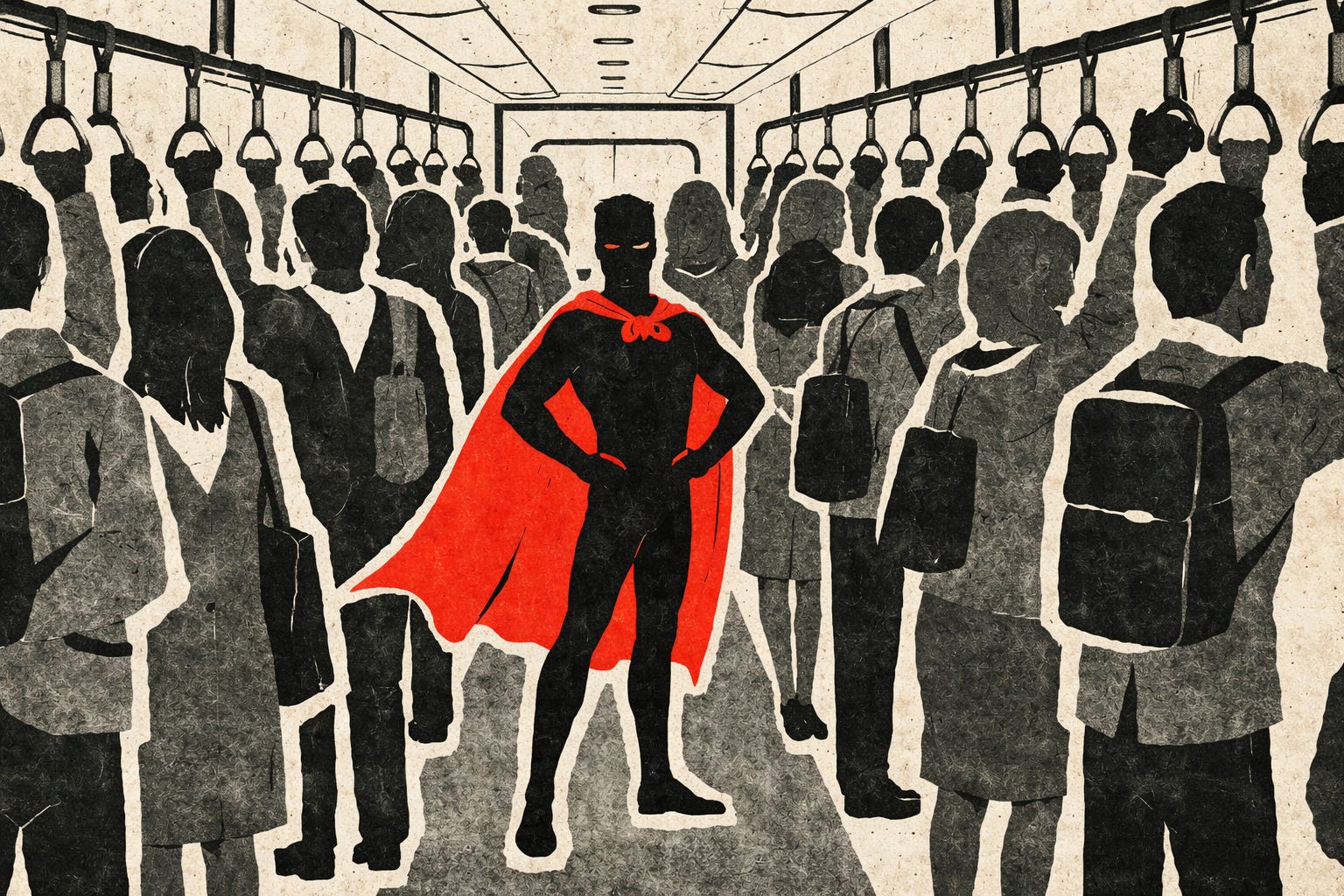
People are more likely to give up their seat to a pregnant-looking passenger when someone dressed as Batman is on the train. Across 138 rides on the Milan metro, 67.21% offered a seat with Batman present, compared with 37.66% without.
When humans and dogs look each other in the eye, both release oxytocin, the same hormone that bonds mothers to their children.
Early mammals that lived with dinosaurs more than 150 million years ago likely had dark grey-brown fur and were mostly active at night.
Urban forests can make the air cleaner, cutting average fine particulate matter in busy parts of a city by 4.2%. But fast plant growth can also raise pollen exposure by 7.4%.
Older adults who take regular afternoon naps have better cognitive function than non-nappers, with 30-90 minute rest periods providing the optimal benefits.
Humans have visually documented just 0.001% of the deep seafloor, according to a 2025 study.
Young honey bees learn to waggle dance by watching older bees. Without this guidance, they make lasting errors, especially when encoding distance.
Shrimp make up 51% of all farmed animals worldwide: about 230 billion alive at any moment, compared with 33 billion chickens, 125 billion farmed fish, 1.55 billion cattle, and 779 million pigs.
House sparrow numbers in London dropped by 71% between 1994 and 2019, likely due to tidier gardens and avian malaria.
Global deaths from air pollution fell 21% from 2013 to 2023, largely because cleaner cooking cut household smoke.
Microplastics are harming crops by making it harder for plants to photosynthesise. This pollution may already be cutting global harvests of wheat, rice, and maize by up to 14%, and the problem is expected to get worse.
Cola, lemonade, iced tea, and beer in glass bottles can contain up to 50 times more microplastics than the same drinks in plastic bottles or cans. The main source is the painted metal cap: its plastic coating scratches during storage and transport, flaking into the drink.
All government buildings in Finland have an on-site sauna.
After GDPR rolled out in May 2018, US-led investment in EU startups fell: the number of deals dropped by 21%, and the amount invested dropped by 13%. That’s about $1.6 billion less per year.
Oxford academics drank for decades from a human skull — possibly of an enslaved woman — at Worcester College. The skull-cup, donated by a fascist sympathiser in 1946, was only retired in 2015.
On average, people spend about 78 minutes a day travelling from one place to another, regardless of where they live or how rich they are.
Only 15% of previously married women say they want to remarry, about half the share of men who do.
From 1928 to 1948, town planning was an Olympic event. In 1932, British architect John Hughes won gold for designing a sports and recreation centre in Liverpool.
Neanderthals were morning people, and if you like waking up early, you might have them to thank. A study comparing modern human DNA with Neanderthal fossils found shared genetic variants linked to early rising.
As the 2025 papal conclave neared, Cardinal Philippe Ouédraogo’s birthday shifted — from January 25 to December 31, 1945 — making him 79 instead of 80, and still eligible to vote for the next pope.
A London council banned street performances in Leicester Square after a judge ruled that repetitive sounds, including pop songs, are a known feature of “psychological torture.”
Evolution keeps making crabs. The crab-like body plan has evolved at least five separate times over the past 250 million years, a recurring trick so common it has its own name: carcinisation.
Scotland became Scotland only in the Late Middle Ages. Before that, it was known as Albania, while “Scotland” meant Ireland.
In medieval England, some taxes were paid in eels. The village of Harmston alone owed its earl 75,000 eels a year. Wisbech fishermen paid monasteries nearly 35,000. By 1086, the national total topped half a million eels.
As many as 95% of the planet’s fungal species are still unknown to science.
Previously in Hypertextual:
And that’s it for today! Thanks for reading! If you enjoy the newsletter, share it with a friend. And if you really enjoyed it, consider upgrading to a paid subscription: it helps support my work and means a lot.
Elia Kabanov is a science writer covering the past, present and future of technology (@metkere).
Cover art: Elia Kabanov feat. DALL-E.