
🍄 13 things I learned this month

Hey folks! First things first: sorry for the silence. I’ve been busy with a couple of projects I can’t wait to tell you about; more on those soon. A warm welcome to everyone who’s joined since my last issue, and thank you to the regulars for staying and supporting me.
Now, back to business. This week: how a Scottish mountain was once used to weigh the entire Earth, why “Viking” may have been a job title rather than a nationality, and how fungi could replace mining. Plus lots of other fascinating facts!
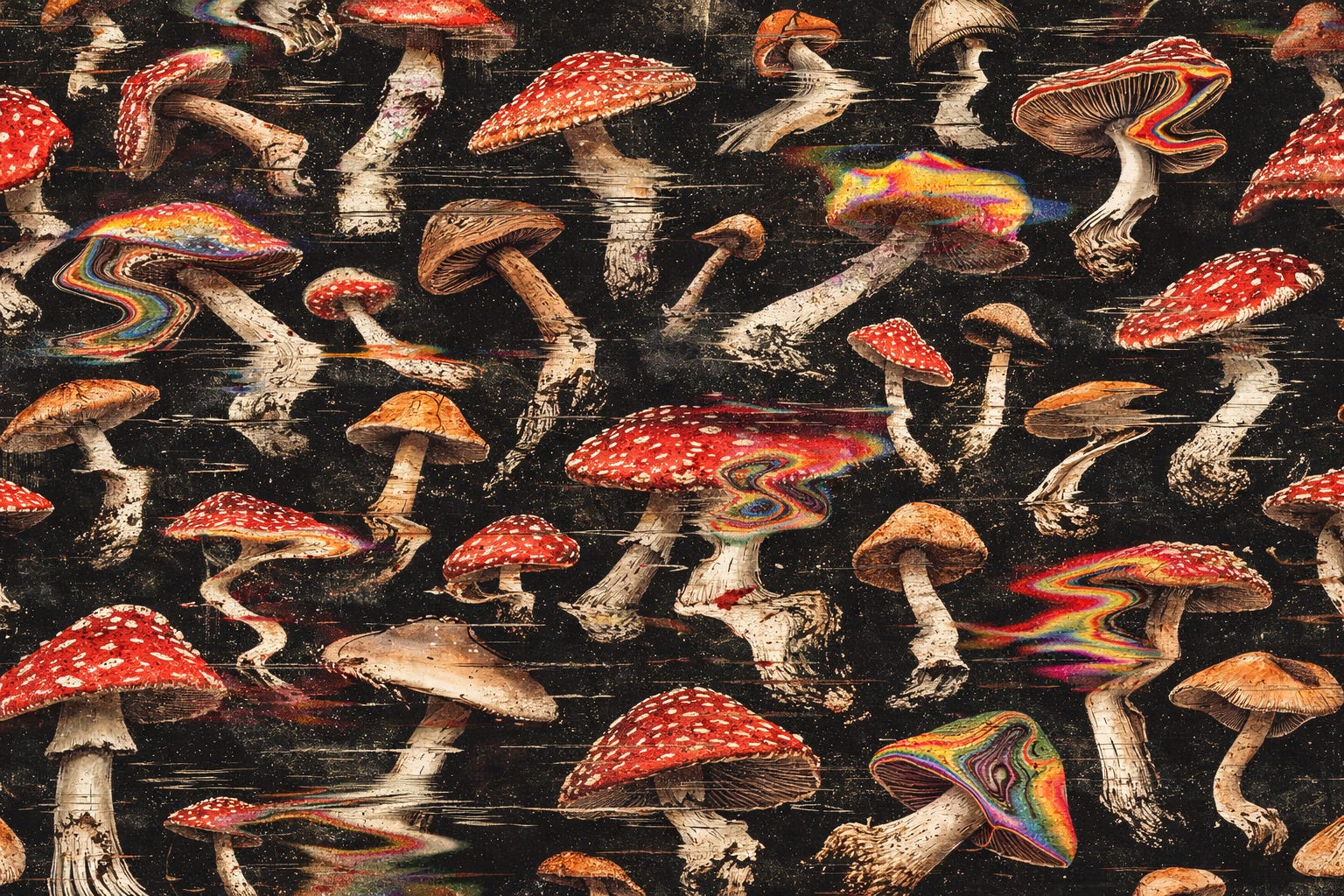
Fungi can extract rare earth metals from waste, soil, and water, producing no toxic byproducts and working in places where conventional mining is too difficult or costly.
When humans switched to softer foods after agriculture spread, their jaws shrank and adults kept the slight overbite normal in children. Within a few thousand years, that tiny shift made “f” and “v” sounds easy to produce, opening up a whole new world of words.
DNA analysis suggests that “Viking” sometimes was a job description: burial sites in the UK have turned up individuals with no Scandinavian ancestry, while some people buried in Scandinavia had Irish or Scottish parents.
Following Trump’s threats to annex Greenland, an app that helps shoppers avoid American products jumped to the top of Denmark’s Apple App Store, which runs on American software and hardware.
Reading, writing and learning a language can lower your risk of dementia by almost 40%.
In 1774, scientists measured the mass of the Earth by standing next to a Scottish mountain and watching how much its gravity tilted a hanging weight toward it. The answer was within 20% of modern measurements.
Since 2000, faster swings between El Niño and its opposite phase have been melting sea ice off the northeast coast of Russia, bringing warmer, wetter autumns to a region that used to freeze reliably.
Just 7 petrol cars, 29 hybrids, and 98 diesel cars were sold in Norway in January 2026. New electric cars count: 2,084.
The number of professional chimney sweeps in the UK has grown from about 590 in 2021 to 750 today, partly driven by rising energy costs.
When Gmail was released as a public beta in 2004, it ran on 300 old Pentium III computers that nobody else at Google wanted.
Much of German national identity was built on a text by the Roman writer Tacitus, who described Germanic tribes as noble, fierce, and racially pure, without ever having visited their lands. It was largely fiction, written to shame decadent Romans. When Germans read it later, they took it literally.
AI chatbots that store your conversation history tend to become more agreeable over time, telling you what you want to hear rather than what’s accurate.
The Vatican launched an AI-assisted live translation service for Mass at St Peter’s Basilica, so people can follow along on their phones in up to 60 languages in real time.
From my mailbox
Sam Matey-Coste: “In February 2026, two pairs of beavers were released into the Par and Fowey rivers, becoming the first wild beavers in Cornwall since local extinction in Great Britain in the 1600s.”
Alec Luhn: “Polar bears are getting fatter in the fastest-warming place on Earth.”
Ed Conway: “Britain has never had to rely on imported salt, never in modern civilisation, but we’re on the brink of losing our salt independence.”
What I’ve been reading
Being cold doesn’t make you sick, so why are illnesses more common in winter?: “Cold exposure can weaken immune defences in the nose and airways. Behavioural and environmental factors typical of winter, such as indoor crowding, poor ventilation, and reduced sunlight leading to lower vitamin D levels, further increase the risk of viral spread.”
New York is going to flood. Here’s what the city can do to survive: “The city could increase its ability to absorb water, converting wide areas of asphalt and concrete to green space. It could fortify by building barriers along its shores, possibly even a gate around the harbour. Or it could retreat, relocating people out of the most hazardous regions.”
Searching for birds: “As you scroll through the following interactive graphics, you’ll get a glimpse at roughly 700 North American and Hawaiian species and learn about why some of them make us fall in love.” By the way, have you tried my birds game? Play it now!
And that’s it for today! Thanks for reading! If you enjoy the newsletter, share it with a friend. And if you really enjoyed it, consider upgrading to a paid subscription: it helps support my work and means a lot.
Elia Kabanov is a science writer covering the past, present and future of technology (@metkere).
Cover art: Elia Kabanov feat. DALL-E.